
Pale Yellow vs. Golden Amber: What Color Reveals About Camellia Oil Quality & Price
- Cici Li
- 19 hours ago
- 2 min read

While browsing high-end supermarkets like Sam's Club in China recently, you might notice a startling trend in the cooking oil aisle: some bottles labeled "Camellia Oil" are sold at shockingly low prices.
Looking closely, these low-priced oils appear extremely pale—almost clear and watery—like a faint translucent yellow. In contrast, He Lu Fang Cold-Pressed Camellia Oil glows with a rich, vibrant golden-yellow hue.

This raises an essential question: Why are some camellia oils pale yellow while others are rich gold? And why is pale camellia oil so suspiciously cheap?
The secret lies in the extraction method. The color of camellia oil is the most direct visual indicator of its processing grade and nutritional integrity.
01. Pale & Watery: The Result of Industrial Refining & Deodorization
When camellia oil appears almost colorless and lacks any natural botanical aroma, it has almost certainly undergone heavy industrial RBD (Refining, Bleaching, Deodorizing) or Chemical Solvent Extraction (Hexane).
Why is it Bleached? Industrial mass production uses chemical bleaching clays to strip away colors, impurities, and off-odors caused by low-grade seeds or high-heat chemical extraction.
What is Lost? High-heat chemical bleaching strips away the oil's most precious bioactive antioxidants: Natural Carotenoids, Squalene, and Vitamin E.
Why is it so Cheap? Solvent extraction extracts nearly 99% of the oil from cheap, mass-harvested or leftover seed meal, drastically driving down production costs.
While safe for basic cooking, refined pale oil is essentially an "empty lipid"—stripped of its nutritional soul and raw vitality.
02. Brilliant Golden: The Mark of Raw, Unrefined Cold-Pressing
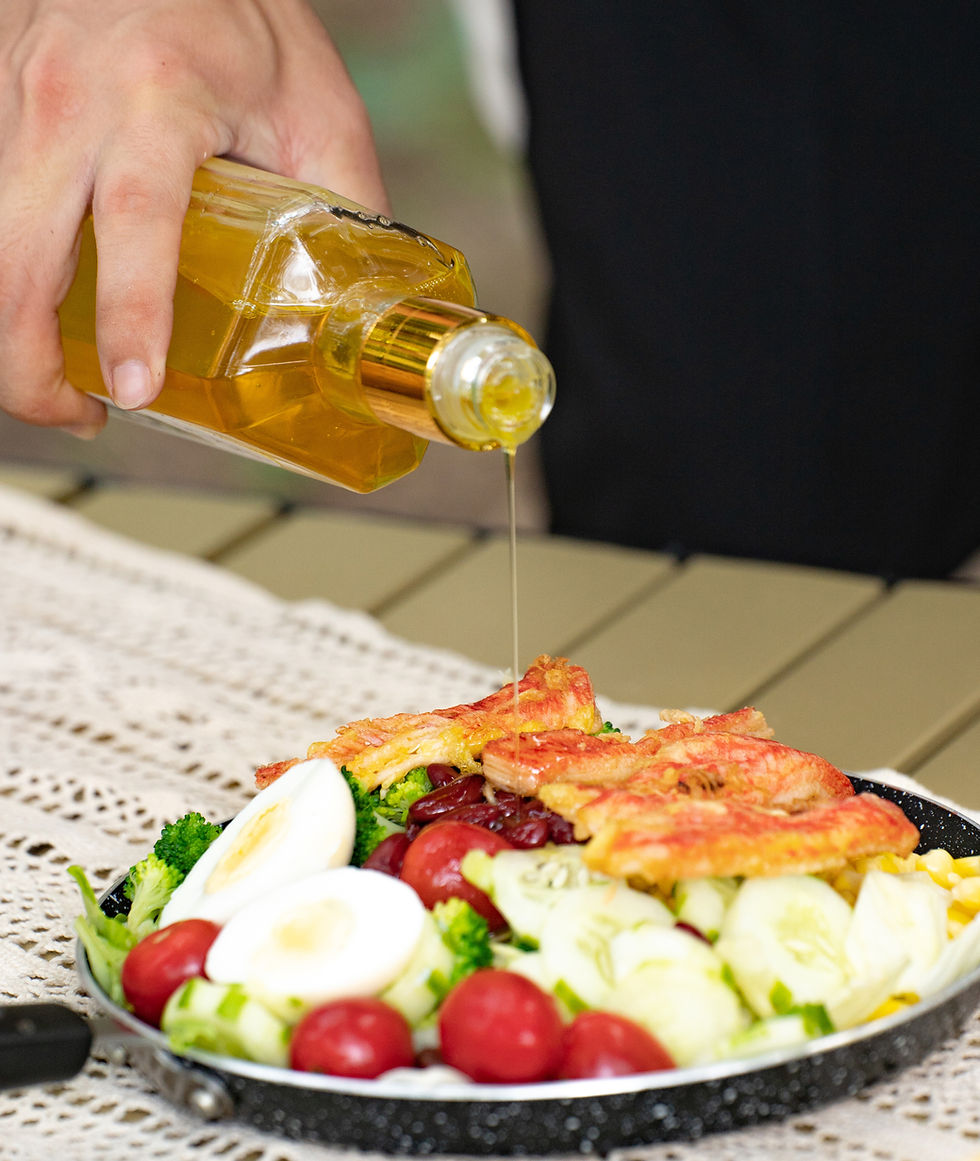
In sharp contrast, authentic first-cold-pressed wild camellia oil naturally radiates a clear, golden-amber glow.
Where the Gold Comes From: This rich color is produced by naturally occurring Carotenoids and fat-soluble antioxidants present in wild mountain tea seeds. Undamaged by extreme heat or chemical bleaching, these nutrients remain fully intact.
Untouched Natural Aroma: Golden cold-pressed oil preserves the subtle, earthy, and nutty fragrance of the wild seeds, offering a smooth and clean mouthfeel.
Maximized Cellular Nutrition: It is this golden hue that preserves the oil's ~80% Monounsaturated Oleic Acid, squalene, and anti-inflammatory polyphenols.
💡 At a Glance: Color & Quality Guide
Indicator | Refined / Solvent Extracted Oil (Pale Yellow) | He Lu Fang Cold-Pressed Oil (Golden Yellow) |
Extraction | Chemical Solvent (Hexane) + High-Heat Bleaching | 100% Low-Temperature Physical Cold-Pressing |
Appearance | Pale, almost clear, thin consistency | Brilliant golden yellow, clear, and radiant |
Aroma | Odorless or flat | Subtle, earthy, and nutty botanical aroma |
Nutrition | Key antioxidants (Squalene) | Maximized Squalene |
Price Point | Suspiciously cheap (Mass Industrial) | Premium & Fair (Wild Single-Origin Seeds) |
Pure Gold, Unfiltered by Industry
In nutrition, extreme industrial processing almost always comes at the expense of natural health benefits.
Just like unrefined raw honey or extra virgin olive oil, He Lu Fang Camellia Oil proudly retains the golden hue gifted to it by ancient mountain forests. We refuse chemical bleaching—delivering raw, uncompromised wellness directly to your home.


Comments